
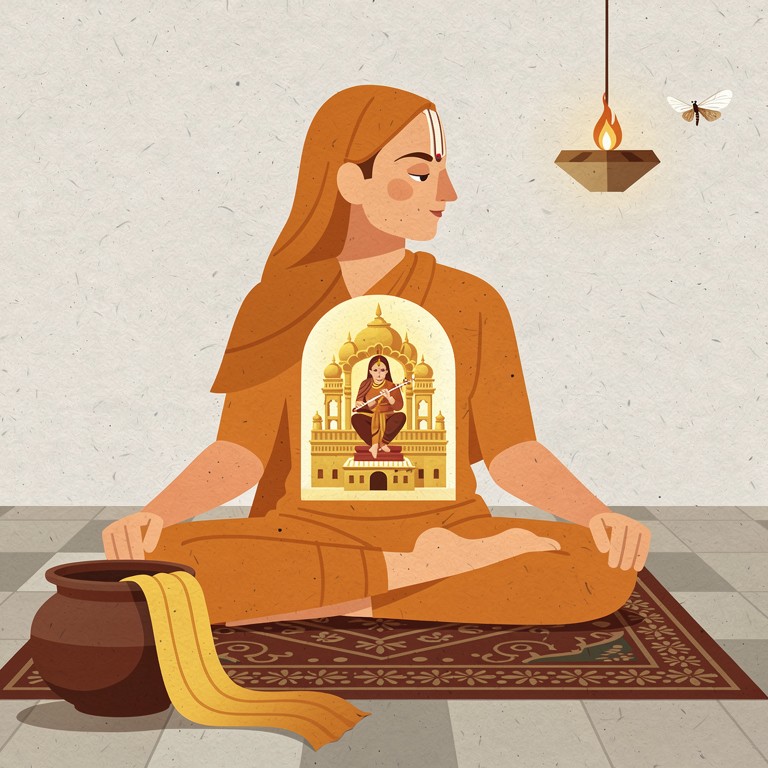
A reflection on the inner kingdom, in the company of the Bhagavad-gītā
There is an old image, common to the Stoics of Rome and to the sages of Bhārata-varṣa: that the soul is dyed by what it dwells upon. Whatever color the mind soaks in, the life takes on. A mind steeped in praise becomes vain; a mind steeped in fear becomes small; a mind steeped in the Supreme becomes luminous.
Marcus Aurelius wrote in his private notebook that the soul is dyed by the color of its thoughts. He had read no Gītā. And yet four centuries before him, on a battlefield between two armies, Śrī Kṛṣṇa had spoken the same truth to a paralyzed warrior — only with greater precision, because He spoke not as a philosopher consoling himself, but as the source of the philosophy itself.
“Whatever state of being one remembers when he quits his body, that state he will attain without fail.” — Bhagavad-gītā 8.6
Śrīla Prabhupāda, in his purport, makes the matter terrifyingly concrete. The thought at the moment of death is not a lottery. It is the cumulative residue of every thought one has cultivated for a lifetime. The dye does not appear at the end; it has been soaking the cloth all along.
So the first question of the spiritual life is not what shall I do? but what am I thinking?
Events Are Neutral; Only Judgment Wounds
The Stoic insight that events themselves have no power to disturb the soul — that it is the mind’s verdict on those events that produces grief — is not foreign to Vedānta. It is its starting point.
“O son of Kuntī, the nonpermanent appearance of happiness and distress, and their disappearance in due course, are like the appearance and disappearance of winter and summer seasons.” — Bhagavad-gītā 2.14
Note Kṛṣṇa’s word: titikṣasva — tolerate. He does not say fight the cold, nor fix the summer, nor complain to the gods. The dualities of pleasure and pain (sukha-duḥkha) are mātrā-sparśās — mere touches of sense perception, born of contact between the senses and their objects. They arrive, they depart. The wise neither chase the pleasant nor flee the unpleasant; he allows the seasons to pass over him as they pass over a mountain.
Prabhupāda’s purport draws the practical edge: one does not abandon one’s prescribed duty because the body is uncomfortable. Arjuna cannot lay down his bow because grief has touched him. The grief itself is a winter that will pass. The duty remains.
This is the foundation of the inner citadel.
The Mind: Best Friend or Worst Enemy
The Stoics speak of retreating into the inner fortress — a still place within where no external blow can reach. The Gītā agrees, but issues a warning: the fortress is only as friendly as its garrison.
“For him who has conquered the mind, the mind is the best of friends; but for one who has failed to do so, his very mind will be the greatest enemy.” — Bhagavad-gītā 6.6
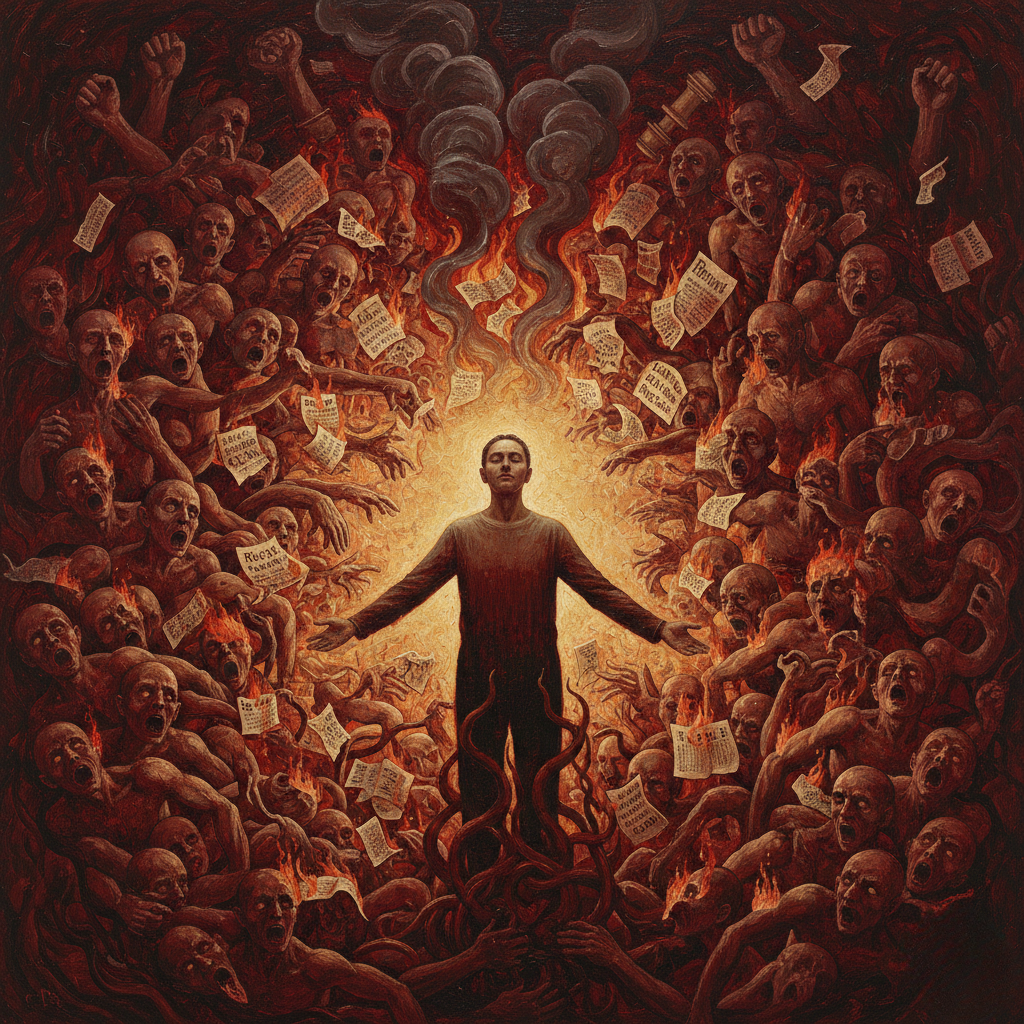
A mind unconquered does not become a refuge — it becomes a torture chamber. To “go within” while the mind still serves lust, anger, fear, and craving is to lock oneself inside with one’s enemies. Prabhupāda is unambiguous in his purport: real yoga is the work of training the mind to serve the Supreme rather than the senses. Without that training, withdrawal is not peace — it is solitary confinement.
The “internal citadel,” in the Vedic understanding, is therefore not a place but a practice: the daily, lifelong work of turning the mind toward Kṛṣṇa, so that when one finally retreats inward, one finds Him there.
The Chain That Binds
Why do we suffer? Because we have welded our happiness to things we cannot control: the praise of strangers, the obedience of our body, the security of our wealth, the loyalty of those around us. The Gītā traces the entire genealogy of our misery in two verses:
“While contemplating the objects of the senses, a person develops attachment for them; from attachment lust develops; from lust anger arises.” — Bhagavad-gītā 2.62
Read it slowly. The whole chain begins with one quiet act — contemplation. A passing thought, lingered on. From that lingering, attachment. From attachment, craving. From thwarted craving, anger. From anger — Kṛṣṇa continues in 2.63 — bewilderment, loss of memory, loss of intelligence, and total ruin.
Every collapse of the inner life can be traced back to a single moment when the mind was permitted to dwell. This is why Marcus’s discipline of attention is not optional even for the philosopher — and why for the bhakta it is the daily front line. The dye is mixed in the moment of contemplation. By the time the cloth is colored, it is too late to choose.
All Else Is Smoke
The body is borrowed dust. Wealth is borrowed motion. Fame is borrowed sound. Each will be returned to the elements that lent them. The Gītā does not say this with bitterness — it says it with relief. To know what is smoke is to stop chasing it.
What remains, when the smoke clears, is the soul and its relationship with the Supreme. Justice in action. Truth in speech. Acceptance of what fate (vidhi) brings. And — the Gītā’s specific addition — remembrance of the Lord.
The Stoic stops at the citadel walls. The Gītā opens the inner door and reveals who has been waiting inside all along.
īśvaraḥ sarva-bhūtānāṁ / hṛd-deśe ‘rjuna tiṣṭhati “The Supreme Lord is situated in the heart of every living being.” — Bhagavad-gītā 18.61
The fortress is inhabited.
The Question
Marcus Aurelius, alone in his tent, wrote a question to himself that no emperor and no slave can ever answer for another:
Are you prepared to drop your complaints about how the world treats you, and focus entirely on how you treat the world?
The Gītā would receive that question with a small correction. Not how you treat the world — for the world is itself a passing season — but how you offer yourself to the One who sustains the world.
The dye is being mixed today. In the small thoughts. In the lingering glances. In the quiet preferences. The cloth of this life is already in the dye-bath of your attention.
Choose the color carefully.